
Let’s be real—figuring out whether something online is a scam or legit check situation is harder than ever. Scammers are smarter now. Their websites look polished. Their emails sound human. And sometimes? Even experienced users hesitate.
So here’s the straight answer:
A scam or legit check is the process of verifying whether a website, offer, or person is trustworthy by analyzing signals like domain history, payment methods, user reviews, and behavior patterns.
If you’re here, you probably feel unsure about something. That hesitation is a good sign. Most people who get scammed ignored that exact feeling.
What Is a Scam or Legit Check (And Why It Matters More in 2026)
A scam or legit check isn’t just typing a name into Google and hoping for reassurance. It’s about connecting small clues.
From my experience auditing suspicious platforms, one thing stands out—legitimate businesses leave a digital trail. Scammers try to fake one.
In 2026, fraud tactics are evolving fast:
- AI-written fake testimonials that sound realistic
- Clone sites that mirror real brands almost perfectly
- Deepfake voice calls pretending to be support teams
That’s why surface-level checks don’t cut it anymore. You need layered verification.
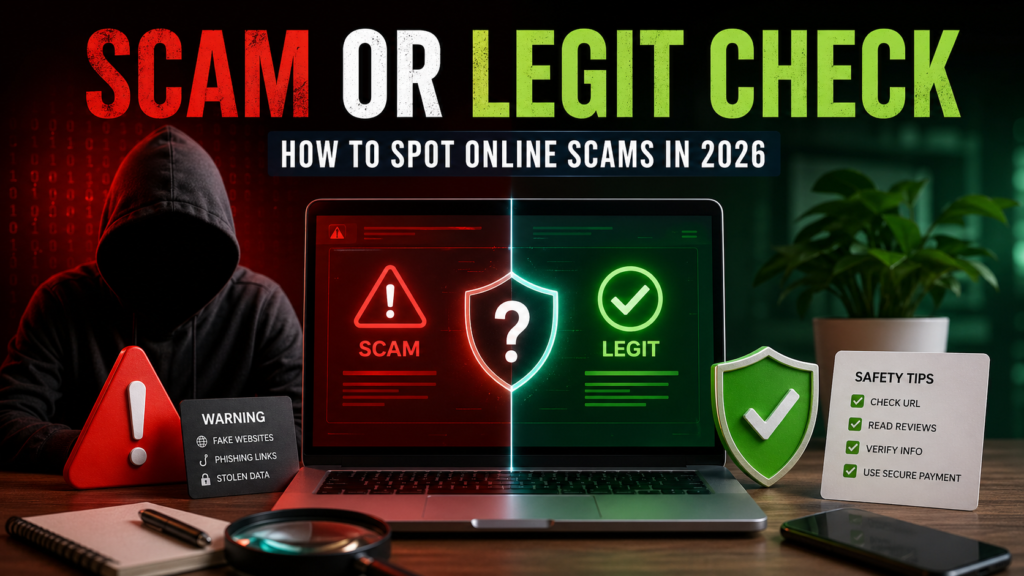
Quick Scam or Legit Check Checklist (Use This First)
When I’m in a hurry, this is my go-to checklist. It won’t catch everything, but it filters out most scams quickly.
1. Domain Age & Ownership
A brand-new domain isn’t automatically bad—but if it’s less than 3–6 months old and selling expensive products, I get cautious.
Hidden ownership isn’t unusual, but when combined with other red flags, it matters.
2. Payment Methods
Crypto-only payments? That’s a hard stop for me.
Legit businesses offer multiple options and clear refund terms.
3. Website Quality
Look beyond design. Check wording, product descriptions, and consistency.
Many scam sites look good visually but fall apart when you read closely.
4. Reviews Outside Their Website
Never trust only on-site reviews. I always cross-check with independent platforms or even forums.
If reviews feel repetitive or overly generic, that’s usually scripted content.
5. Too Good to Be True Offers
Huge discounts or “guaranteed returns” are classic bait.
If the deal feels unrealistic, it usually is.
Deep Dive: How I Personally Verify a Website
This is where most people stop—but this is where I start.
Step 1: Reverse Image Search
I’ve caught multiple fake stores using product images lifted from real brands.
A quick reverse search often exposes them instantly.
Step 2: Check Backend Signals
This is a bit technical, but worth it.
I look at:
- SSL certificate details (who issued it, when)
- Hosting country vs claimed business location
- Sudden site changes or inconsistent loading
These small signals often reveal whether a site is rushed or genuine.
Step 3: Social Media Presence
A real business has history—posts, comments, even complaints.
No engagement or only polished posts with zero interaction? That’s suspicious.
2026 Update: New Scam Tactics You Must Know
Scammers are adapting fast. Here’s what I’ve personally noticed recently.
AI-Powered Scam Websites
Some sites now look perfect. No grammar mistakes. Clean UI.
But when you dig deeper, there’s no real company behind them—just a surface.
Fake Customer Support Agents
Live chats that respond instantly and sound “too smooth” are often automated scripts.
They avoid specific questions and push you toward payment.
“Verification Fee” Scams
This one is growing fast.
They tell you to pay a small fee to unlock funds or confirm identity.
Once you pay… silence.
Pro-Tip: My Personal Take
From my experience, the biggest mistake people make during a scam or legit check is trusting one good sign. A professional website or polite support agent doesn’t prove legitimacy. I always look for consistency across multiple layers—technical details, user feedback, and business transparency. If even one layer feels off, I slow down and investigate further. That small pause has prevented costly mistakes more than once.
Tools I Actually Use (Not Just Popular Ones)
I don’t rely on dozens of tools—just a few that actually help.
- WHOIS Lookup – To check domain age and patterns
- Wayback Machine – To see if the site existed before or suddenly appeared
- Trustpilot / Forums – Real user experiences (not filtered reviews)
- Google Safe Browsing – Basic security check
But tools are only part of the process. Judgment matters more.
Behavioral Red Flags Most People Ignore
This is where things get subtle.
Pressure Tactics
If you’re being rushed, that’s intentional.
Scammers don’t want you thinking—they want quick decisions.
Over-Polished Language
Ironically, some scam messages sound too perfect.
Real businesses often have slight imperfections. That’s normal.
Inconsistent Contact Info
Different addresses or missing details across pages are common in scam sites.
Legit businesses stay consistent.
How to Do a Scam or Legit Check for Online Jobs & Investments
Not all scams look the same. Jobs and investments require extra caution.
For Online Jobs:
- Never pay upfront fees
- Verify company registration details
- Check if real employees exist on professional platforms
For Investments:
- Guaranteed returns = major red flag
- Verify regulatory approvals
- Be cautious of insider claims or urgency
I’ve seen cases where everything looked legit—until users tried withdrawing money. That’s when scams reveal themselves
FAQ: Scam or Legit Check (People Also Ask)
1. How can I quickly check if something is a scam or legit?
Start with domain age, payment methods, and external reviews. If two or more red flags appear, avoid proceeding.
2. Are new websites always scams?
No, but they carry more risk. Always combine multiple checks before trusting them.
3. Can scammers fake reviews?
Yes. Many now use AI to generate realistic reviews. Look for detailed, varied experiences instead of repeated praise.
4. What’s the biggest red flag in a scam or legit check?
Urgency. If you’re being pressured to act quickly, stop immediately.
5. Is it safe to trust social media ads?
Not always. Many scams run through ads. Always verify the source before taking action.
Final Thoughts: Scam or Legit Check Is a Skill
A proper scam or legit check isn’t a one-time task. It’s a habit you build over time.
The more you practice spotting patterns, the sharper your instincts get.
And honestly? That instinct is your best defense.
If something feels off, don’t ignore it. Take a few extra minutes.
That small effort can save you from a big loss.