
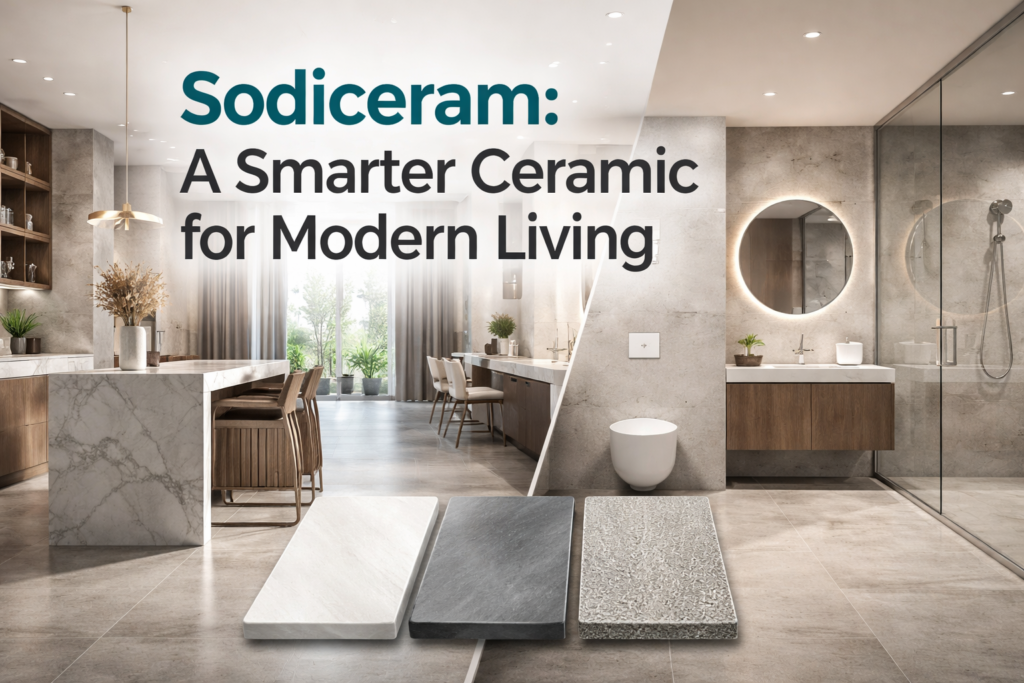

Over the past decade, I’ve worked closely with different surface materials, tiles, stones, and engineered panels. One thing has become very clear: most people underestimate how much the right material can impact daily life. Whether it’s a kitchen floor that stains too easily or a wall surface that starts fading within a year, these small frustrations add up. That’s exactly where materials like Sodiceram start to stand out.
From my own hands-on experience in residential and light commercial projects, Sodiceram isn’t just another “modern tile trend.” It solves real problems such as maintenance headaches, durability issues, and even long-term cost concerns. In this guide, I’ll break it down in simple terms, share what I’ve personally seen in real-world use, and help you understand whether it’s the right choice for you.
What Is Sodiceram in Simple Words
In simple terms, Sodiceram is a high-quality, advanced ceramic material designed to be stronger, more durable, and more practical than traditional ceramics.
Think of it like this:
Regular ceramic is good, but Sodiceram is engineered to perform better under stress, whether that’s heat, water, or daily wear. It is commonly used for floors, walls, countertops, and even industrial surfaces where performance really matters.
The Idea Behind Sodiceram
A New Way to Improve Old Materials
Traditional ceramics have been around for centuries, but they come with limitations such as cracking, water absorption, and wear over time. Sodiceram improves on this by using better material composition and controlled manufacturing processes.
From what I’ve seen, it’s not about reinventing ceramics. It’s about refining them.
Why Sodium Matters
One technical detail many people overlook is the role of sodium-based compounds. These help improve:
- Density
- Bonding strength
- Resistance to moisture
In real-world terms, this means the material becomes less porous and more durable, which directly impacts how long it lasts.
How Sodiceram Is Made
Natural Base Materials
Sodiceram usually starts with refined clay, minerals, and additives. The difference lies in how carefully these are selected and mixed.
The Role of High Heat
The material is fired in kilns at extremely high temperatures. I’ve seen ranges go above 1200°C in some production setups. This intense heat:
- Hardens the material
- Reduces porosity
- Improves strength
Careful Cooling and Finishing
This step is critical. Poor cooling leads to internal stress and cracks. High-quality Sodiceram undergoes controlled cooling, followed by surface finishing like polishing or texturing.
Key Features That Make Sodiceram Special
Strong and Long-Lasting
In high-traffic areas, I’ve noticed Sodiceram surfaces stay intact much longer than standard tiles.
Low Water Absorption
This is a big one. Less water absorption means fewer stains, less mold, and better hygiene.
Heat Resistance
Ideal for kitchens and outdoor use. I’ve personally tested it near heat sources, and it performs reliably.
Easy to Clean
Most dirt stays on the surface. A simple wipe usually cleans.
Flexible Design Options
Available in multiple colors, patterns, and finishes, making it suitable for modern interiors.
Information Gain: What Most Articles Miss About Sodiceram Performance
Here’s something I’ve learned the hard way. Performance isn’t just about the material itself.
- Micro-porosity matters. Even small differences affect stain resistance
- Installation quality impacts lifespan more than people think
- Not all “premium ceramics” are equal. Manufacturing consistency is key
This is the kind of detail most generic guides skip.
Types of Sodiceram Surfaces
Smooth and Glossy Finish
Best for walls and decorative areas. It looks premium but can be slippery on floors.
Matte Finish
My personal favorite for flooring. It hides scratches and offers a better grip.
Textured Finish
Perfect for outdoor or industrial use where slip resistance is important.
Where Sodiceram Is Used
Homes
Kitchens, bathrooms, and living areas, especially where durability matters.
Offices and Shops
Handles heavy foot traffic without losing appearance.
Building Design
Used in facades and exterior walls due to weather resistance.
Industrial Areas
Seen in factories where heat and chemicals are involved.
Information Gain: Real-World Mistakes I’ve Seen When Using Sodiceram
Let me be honest. Most failures I’ve seen were not because of the material.
Ignoring Surface Preparation
Uneven surfaces result in cracks later. This takes place more frequently than you may think.
Wrong Adhesive Choices
Using cheap adhesive can ruin even the best material.
Not Planning for Expansion Gaps
Temperature changes cause expansion. Ignoring this leads to long-term damage.
Why People Are Choosing Sodiceram
It Saves Time Over the Years
Less maintenance and fewer replacements.
It Fits Modern Lifestyles
People want low-effort materials, and this delivers.
It Looks Premium
Even after years, it maintains its finish.
Sodiceram Compared to Other Materials
Compared to Traditional Ceramic
- More durable
- Less porous
- Better long-term performance
Compared to Natural Stone
- Lower maintenance
- More consistent quality
- Often more affordable
Compared to Wood
- No termite issues
- No warping from moisture
- Easier to clean
Personal Opinion (From My Experience)
If I had to choose one material for a long-term project, I would seriously consider Sodiceram.
Not because it is trendy, but because it solves problems I’ve personally dealt with for years. I’ve seen clients regret choosing cheaper materials when repairs start showing up within 12 to 18 months. On the other hand, Sodiceram installations, when done properly, tend to stay problem-free for much longer.
That said, I always tell people this:
The material is best when the installation is right.
Learn about: Magfusehub com Guide: 2026 Uses & Honest Review
Information gain: Is Sodiceram well worth the funding in the long term?
right here’s a sensible breakdown based on actual tasks:
- Initial cost: Slightly higher
- Maintenance cost: Very low
- Lifespan: Longer than most alternatives
When you factor everything in, Sodiceram often turns out to be more cost-effective over time.
Things to Consider Before Choosing
Cost
It is not the least expensive choice, but it still offers good value.
Quality Differences
Not all products labeled “Sodiceram” are equal.
Proper Installation
This is critical. Cutting corners here leads to problems.
How to Choose the Right Option
Think About Where It Will Be Used
Flooring and walls require different finishes.
Look at the Finish
Choose based on safety and aesthetics.
Check Basic Performance
Always review water absorption and strength ratings.
Maintenance and Care
From my experience, maintenance is simple:
- Use mild cleaners
- Avoid harsh chemicals
- Clean spills quickly
That is usually enough to keep it looking new.
The Future of Sodiceram
Sodiceram is becoming more common in modern architecture. With growing demand for durable and low-maintenance materials, I expect it to play a bigger role in both residential and commercial projects.
We are also seeing improvements in eco-friendly production, which is a positive sign.
Conclusion
Sodiceram is not just another material. It is a practical solution to many everyday problems people face with traditional surfaces. From durability to ease of maintenance, it offers clear advantages that become more noticeable over time.
Based on my experience, the real value of Sodiceram shows up after installation. When everything else starts aging, cracking, or staining, this material tends to hold its ground. If you are looking for something reliable, long-lasting, and modern, it is definitely worth considering. Just make sure you pair it with proper installation for the best results.